


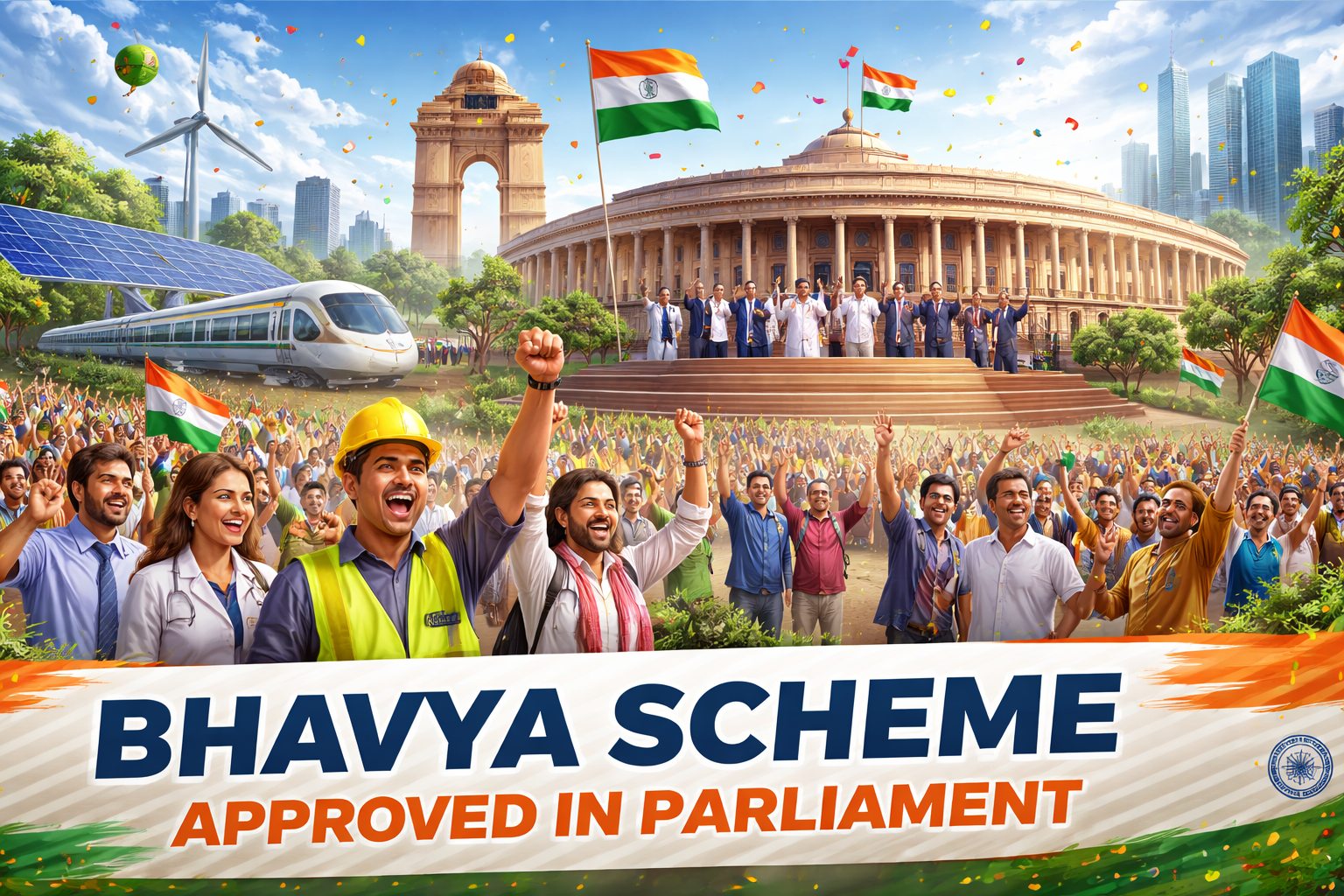
Bhavya Scheme Approved in Parliament marks a major step toward inclusive growth, infrastructure expansion, and economic empowerment in India. Learn key features, benefits, and impact.
Article by: Rupesh Kumar Singh Follow Me
India has taken a significant leap toward socio-economic transformation with the approval of the Bhavya Scheme in Parliament. This ambitious government initiative is being positioned as a multi-sectoral development program aimed at boosting infrastructure, employment, and inclusive growth across the nation.
The approval of the Bhavya Scheme reflects the government’s long-term vision to strengthen India’s economic foundation while ensuring that growth reaches every section of society, especially rural and underprivileged communities.
What is the Bhavya Scheme?
The Bhavya Scheme is a comprehensive development program designed to integrate infrastructure development, social welfare, digital expansion, and employment generation under a single policy framework.
It focuses on:
Modernizing urban and rural infrastructure
Enhancing job opportunities
Promoting digital inclusion
Strengthening public services
The scheme aims to bridge the gap between urban and rural India while ensuring sustainable and equitable development.
Key Features of the Bhavya Scheme
1. Infrastructure Development Push
One of the core pillars of the Bhavya Scheme is the development of:
Smart cities and rural connectivity
Highways, transport corridors, and logistics hubs
Renewable energy infrastructure
This will not only improve connectivity but also attract domestic and foreign investments.
2. Employment Generation
The scheme is expected to create millions of jobs through:
Construction projects
Manufacturing sector expansion
Skill development initiatives
Special focus will be given to youth employment and entrepreneurship.
3. Digital India Expansion
The Bhavya Scheme aligns with India’s digital vision by promoting:
Internet access in remote areas
Digital governance services
AI and technology-driven innovation
This will empower citizens and improve transparency in governance.
4. Social Welfare Integration
The scheme integrates multiple welfare programs to ensure:
Better healthcare access
Education improvements
Financial inclusion
This unified approach reduces duplication and enhances efficiency.
Why is This Scheme Important?
The approval of the Bhavya Scheme in Parliament is crucial because it:
Strengthens India’s economic growth trajectory
Addresses unemployment challenges
Promotes balanced regional development
Enhances global competitiveness
It is being seen as a game-changer policy that could redefine India’s development model over the next decade.
Impact on Common Citizens
For ordinary citizens, the Bhavya Scheme could bring:
Better roads and infrastructure
Increased job opportunities
Improved public services
Access to digital tools and platforms
Rural populations, in particular, stand to benefit significantly from improved connectivity and economic participation.
Political and Economic Significance
From a policy perspective, the scheme demonstrates:
Strong legislative backing
Commitment to long-term reforms
Alignment with global development standards
Economically, it is expected to:
Boost GDP growth
Increase investment inflows
Strengthen India’s position as a global economic power
Challenges and Criticism
Despite its ambitious scope, the Bhavya Scheme may face challenges such as:
Implementation delays
Funding allocation issues
Coordination between central and state governments
Experts suggest that effective monitoring and transparency will be key to its success.
Conclusion
The Bhavya Scheme Approved in Parliament represents a bold and visionary step toward transforming India’s economic and social landscape. If implemented effectively, it has the potential to drive inclusive growth, create opportunities, and modernize the nation at an unprecedented scale.
This initiative could become one of the most impactful government policies in recent years, shaping the future of India’s development journey.


