


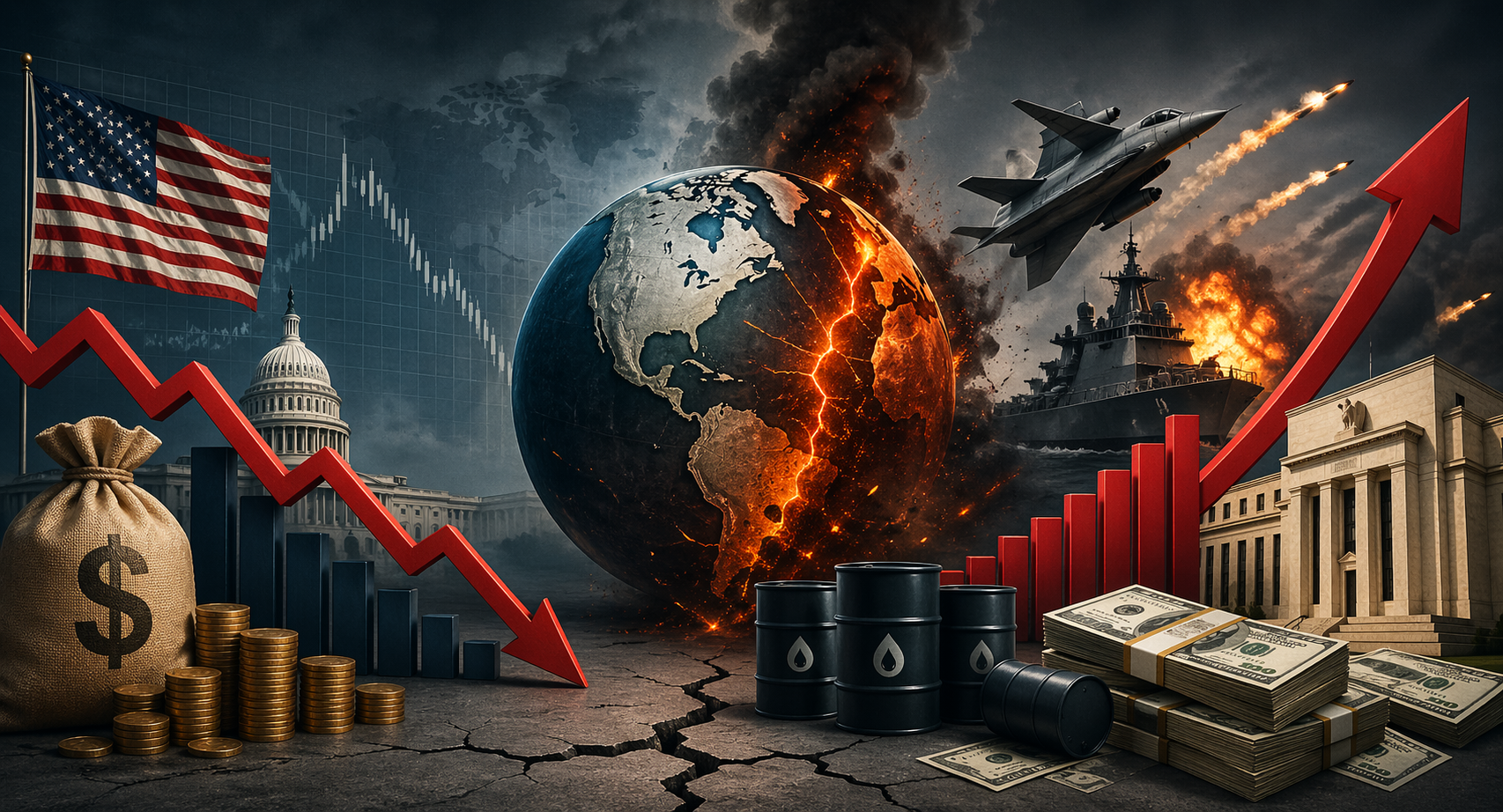
US Iran War Economic Impact is intensifying as daily war spending crosses $2 billion, raising concerns over rising global debt, fiscal deficits, and long-term economic instability worldwide.
Article by: Rupesh Kumar Singh Follow Me
The US Iran War Economic Impact is rapidly emerging as one of the most critical financial concerns in 2026, with estimates suggesting that the United States alone is spending nearly $2 billion per day on military operations, logistics, and strategic deployments. While the geopolitical implications dominate headlines, the deeper and more lasting effect lies in the global economic system, where rising fiscal pressure, mounting debt, and financial instability are beginning to surface.
This conflict is not just a regional war it is a high-cost economic event with consequences that could reshape global markets for years.
The $2 Billion Daily Burn Rate: What It Really Means
Modern warfare is capital-intensive. The current conflict involves:
- Advanced missile systems
- Aircraft carrier deployments
- Intelligence and surveillance infrastructure
- Cyber warfare capabilities
Each of these components significantly increases operational costs. A daily expenditure of $2 billion translates to:
- $60 billion per month
- Over $700 billion annually if sustained
This level of spending rivals the GDP of smaller nations and puts immense pressure on the US federal budget.
Rising Fiscal Deficit: A Structural Concern
One of the most immediate consequences of the US Iran War Economic Impact is the widening fiscal deficit.
Why this matters:
- Governments fund war largely through borrowing, not taxation
- Increased borrowing leads to higher national debt
- The US debt-to-GDP ratio is already at historically elevated levels
As defense spending surges, non-military sectors such as:
- Healthcare
- Education
- Infrastructure
face potential budget constraints. This creates a crowding-out effect, where productive investments are sacrificed for military expenditure.
Global Debt Spiral: A Ripple Effect
The financial burden is not limited to the United States. Allies and global markets are also affected.
Key Transmission Channels:
- Higher Global Interest Rates
- Increased US borrowing pushes up bond yields
- Global borrowing costs rise as a result
- Currency Volatility
- Safe-haven demand strengthens the US dollar
- Emerging market currencies weaken
- Capital Flight from Developing Economies
- Investors move funds to safer assets
- This creates liquidity stress in weaker economies
The result is a global debt spiral, where countries already struggling with post-pandemic recovery face renewed financial pressure.
Defense Spending vs Welfare: The Opportunity Cost
A critical yet often overlooked dimension of the US Iran War Economic Impact is the opportunity cost.
Consider this:
- $2 billion per day could fund:
- Large-scale healthcare programs
- Poverty alleviation initiatives
- Climate change mitigation projects
Instead, these resources are being diverted toward war efforts. This trade-off raises long-term concerns about:
- Human development
- Social stability
- Economic inclusivity
Impact on Inflation and Monetary Policy
War-driven fiscal expansion typically fuels inflationary pressures.
Mechanism:
- Increased government spending boosts demand
- Supply disruptions (especially oil) raise costs
- Central banks respond by tightening monetary policy
This creates a difficult situation:
- Higher interest rates slow economic growth
- Inflation erodes purchasing power
For central banks, balancing growth and inflation becomes significantly more complex.
Investor Sentiment and Financial Markets
Markets react quickly to fiscal instability.
Observed Trends:
- Increased volatility in global equity markets
- Shift toward safe-haven assets like gold
- Rising bond yields due to higher government borrowing
Investors are increasingly factoring in:
- Prolonged conflict scenarios
- Fiscal sustainability risks
- Geopolitical uncertainty
This leads to cautious investment behavior, slowing down global economic momentum.
Long-Term Structural Risks
If the conflict persists, the US Iran War Economic Impact could lead to deeper structural issues:
1. Debt Sustainability Crisis
High and persistent deficits may challenge the long-term sustainability of US debt.
2. Reduced Global Growth
War-induced financial tightening can suppress global demand.
3. Shift in Global Economic Power
Countries less affected by the conflict may gain relative economic advantage.
Conclusion: A War Beyond the Battlefield
The US Iran War Economic Impact is not confined to defense budgets or geopolitical strategy—it is fundamentally reshaping the global financial architecture.
With daily costs reaching $2 billion, the war is accelerating:
- Fiscal imbalances
- Global debt accumulation
- Economic uncertainty
If sustained, this conflict could mark a turning point where economic consequences outweigh military objectives, forcing policymakers worldwide to confront difficult choices between security and sustainability.


