


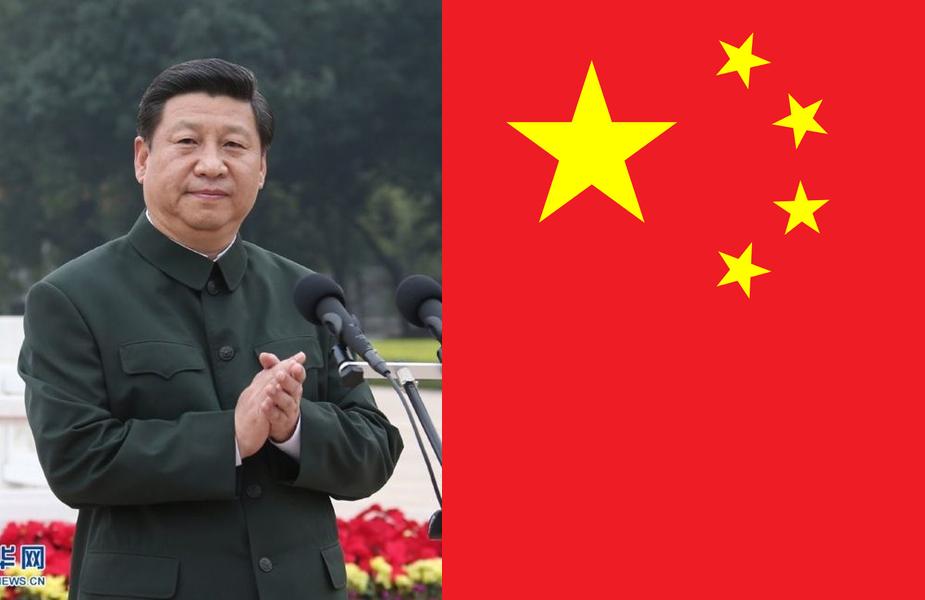
Xi Jinping biography highlights his diplomatic masterclass leadership his rise in China’s politics and the way he cemented a global role amid domestic headwinds.
Article by: Rupesh Kumar Singh
Xi Jinping has emerged as one of the most influential leaders in the twenty first century, shaping not only the destiny of China but also the balance of world politics. His journey from a modest childhood marked by struggle to the top of the Communist Party of China reflects resilience, ambition, and an ability to navigate political complexities with determination. Often described as both pragmatic and authoritative, he has positioned himself as the central figure of modern China’s transformation. His diplomatic masterclass in recent years, especially in times of economic slowdown at home, demonstrates how he continues to project China’s power abroad while consolidating control domestically.
Early Life and Education
Xi Jinping was born on June 15, 1953, in Beijing. He was the son of Xi Zhongxun, a veteran revolutionary and one of the founding members of the Communist Party. However, Xi’s childhood was far from easy. During the Cultural Revolution, his family faced political persecution. His father was purged from the Party, and Xi himself was sent to the countryside in Shaanxi province, where he lived in a cave dwelling and worked alongside farmers. These years of hardship are often credited with shaping his resilience and his deep understanding of China’s rural population.
After the Cultural Revolution ended, Xi studied chemical engineering at Tsinghua University, where he developed his early intellectual and political foundation. Later, he pursued postgraduate studies in Marxist theory and further deepened his ties with the Communist Party’s ideological framework. His academic background, combined with his personal hardships, gave him the image of a leader who understands both theory and practice.
Rise in Politics
Xi Jinping began his political career at the grassroots level, serving in local administrative roles in Hebei and later in Fujian province. Over the years, he held various positions in governance, including Governor of Fujian and Party Secretary of Zhejiang. His leadership style was marked by efficiency, discipline, and an emphasis on economic growth balanced with political loyalty.
Xi’s rise accelerated in the 2000s when he was appointed Party Secretary of Shanghai, one of China’s most important cities. His steady and scandal-free tenure there earned him recognition within the Party hierarchy. In 2007, he was chosen as a member of the Politburo Standing Committee, the highest decision-making body in China, setting the stage for his eventual succession as the top leader.
Becoming China’s Paramount Leader
In 2012, Xi Jinping became the General Secretary of the Communist Party and Chairman of the Central Military Commission. In 2013, he assumed the presidency of China. From the very beginning, he distinguished himself from his predecessors by centralizing authority, emphasizing Party control in every aspect of governance, and launching sweeping anti corruption campaigns.
Under his leadership, the Communist Party consolidated its grip on power, with Xi emerging as the “core” leader. He abolished presidential term limits in 2018, enabling him to potentially remain in power indefinitely. This move was interpreted as a sign of his confidence and his long-term vision for China’s rise as a global power.
Diplomatic Masterclass and Global Vision
Xi Jinping is perhaps best known globally for his bold foreign policy initiatives. The Belt and Road Initiative, launched in 2013, aimed to expand China’s influence through infrastructure investment, trade, and connectivity across Asia, Africa, and Europe. This initiative has been central to China’s global economic strategy, presenting an alternative to Western-led development models.
Xi has also asserted China’s presence in multilateral institutions, from the United Nations to the Shanghai Cooperation Organization. His diplomacy reflects a blend of soft power and strategic assertion. While China faces economic headwinds at home such as slowing growth and debt pressures Xi has projected confidence abroad, hosting summits, mediating in global disputes, and positioning China as a voice for the developing world.
His recent diplomatic performances, including military parades and strategic tours, highlight a leader intent on signaling stability and continuity even when domestic challenges persist. This masterclass in diplomacy showcases how Xi uses global platforms to strengthen his domestic legitimacy and portray China as an indispensable actor in global governance.
Leadership Style and Domestic Policies
Domestically, Xi Jinping has pursued policies aimed at strengthening Party control, reducing corruption, and asserting national pride. His governance is characterized by an emphasis on discipline within the Party, tighter control over media and technology, and an insistence on loyalty to the Communist Party’s vision.
He has launched campaigns to reduce poverty and promote technological self reliance, positioning China as a leader in innovation and green energy. At the same time, critics argue that his leadership has tightened censorship, restricted dissent, and eroded freedoms. Nevertheless, his supporters see him as a leader who has restored China’s confidence and stability.
Balancing Domestic Headwinds
The biggest test of Xi Jinping today is how he manages economic challenges at home. Slowing GDP growth, youth unemployment, and the aftermath of global disruptions pose significant risks. Yet Xi has used diplomacy to balance these headwinds, presenting China as a reliable partner globally while reinforcing domestic faith in his leadership. His narrative emphasizes resilience and the idea that China’s rise is inevitable despite short-term challenges.
Legacy and Future Outlook
As of now, Xi Jinping remains firmly in control, shaping both China’s domestic direction and its international role. His biography is not merely a personal story of resilience but also the story of a nation navigating modernity and tradition, growth and stability, openness and control. His legacy will likely be defined by whether he can sustain China’s global rise while addressing domestic vulnerabilities.
READ MORE: China Multipolar Recalibration Geopolitical Chessboard at the SCO Summit
Conclusion
The biography of Xi Jinping reflects more than the life of a leader. It reflects the transformation of China itself. From a young boy living through political persecution to the most powerful Chinese leader since Mao Zedong, Xi represents continuity, resilience, and ambition. His diplomatic masterclass has ensured China’s place at the global table even as he faces domestic headwinds. Whether history views him as the architect of China’s rise or as a leader who overcentralized power will depend on the years ahead. For now, Xi stands as a symbol of China’s enduring quest for global prominence.


